
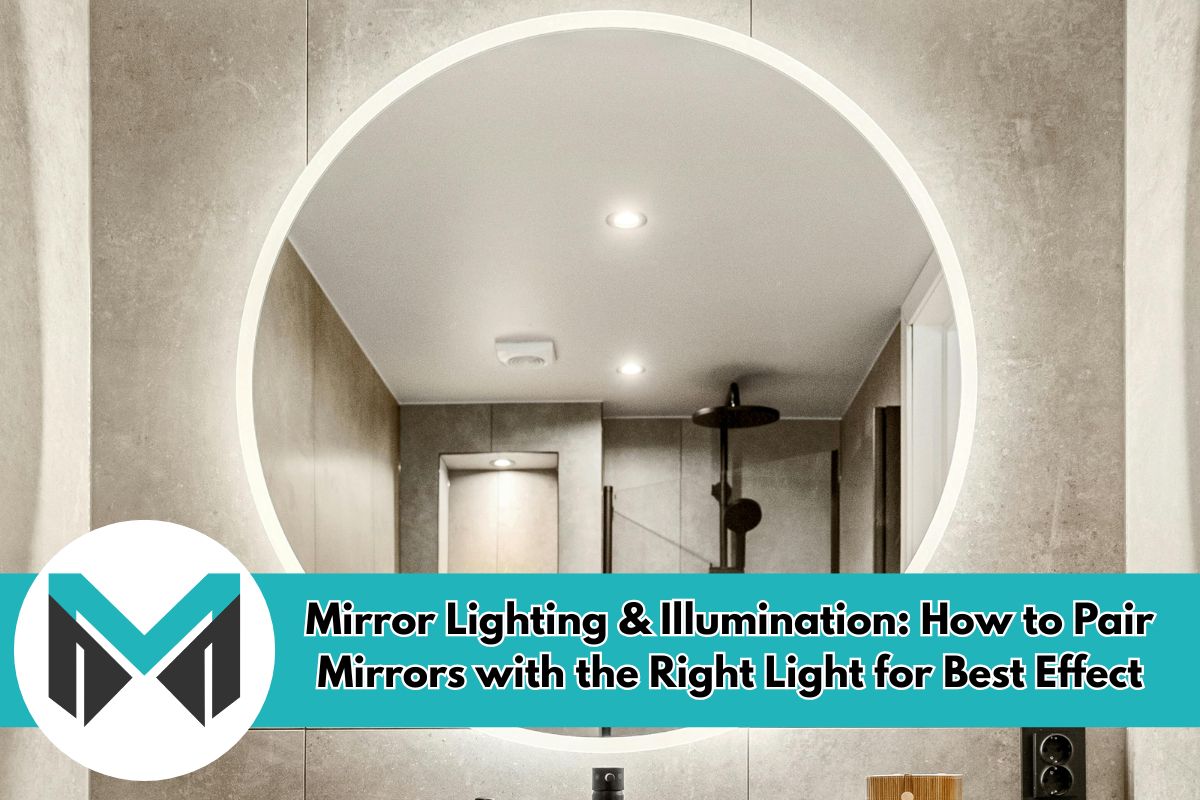
The best way to pair mirrors with lighting is to balance brightness, color temperature, and placement. In Indian homes, mirrors look best under neutral or warm white LED lighting (3000K–4000K) with side or top-mounted fixtures that minimize shadows. The right combination enhances space, clarity, and room aesthetics—especially when chosen as per mirror size.
Why Mirror Lighting Matters More Than You Think
Ever walked into a room where a mirror looks dull despite being beautifully designed?
It’s usually not the mirror—it’s the lighting. The relationship between mirrors and light defines how a room feels, functions, and photographs. Whether it’s a compact apartment bathroom in Noida, a bright living room in Mumbai, or a dressing corner in Delhi, the right illumination can turn a simple mirror into a statement feature.
But here’s the twist: before choosing lights, you must understand how mirror size, placement, and wall proportion affect illumination. That’s where a mirror sizing guide for Indian rooms becomes essential.
Let’s explore how to select the perfect lighting for mirrors of all types—so your space not only looks bigger and brighter but feels balanced and inviting.
1. Understanding Mirror Size, Scale & Proportion for Indian Homes
Before we talk about lighting, let’s start with size.
In Indian interiors—where rooms range from compact 8×10 bedrooms to large 12×14 drawing areas—mirror proportions must align with both wall width and ceiling height.
Here’s a quick Mirror Sizing Guide for Indian Rooms:
| Room Type | Ideal Mirror Width | Ideal Height | Best Placement | Lighting Suggestion |
| Bathroom | 24–36 inches | 24–36 inches | Above washbasin | Backlit LED or top-mounted lights |
| Bedroom | 20–30% of wall width | 3–4 feet | Near wardrobe or dressing unit | Warm side sconces or ring light mirror |
| Living Room | 50–70% of wall width | 3–5 feet | Behind sofa or entry wall | Ceiling spotlight or wall washers |
| Hallway | 12–18 inches | 4–6 feet (full-length) | Eye level | Recessed ceiling light or linear LED |
| Dining Room | 40–60 inches | 30–40 inches | Opposite window | Pendant or chandelier accent |
The takeaway?
Lighting intensity and direction depend on mirror scale. A large living room mirror benefits from ambient and indirect light, while a compact bathroom mirror demands precise, shadow-free illumination.
2. The Science of Light: How Different Lighting Affects Mirrors
Light isn’t just brightness—it’s temperature, tone, and diffusion. Let’s decode this:
- Warm White (2700K–3000K): Adds coziness and depth. Ideal for bedrooms and vanity areas.
- Neutral White (3500K–4000K): True-to-color reflection; great for makeup mirrors and bathrooms.
- Cool White (5000K+): Crisp, modern vibe for gyms or dressing rooms with metal framed mirrors.
Pro Tip:
Avoid harsh downlights directly above mirrors—they create unwanted shadows. Instead, use side or back illumination for even brightness.
3. Mirror + Lighting Pairing Ideas by Room Type
A. Bathroom Mirrors: Clarity & Shadow-Free Illumination
Bathrooms are where lighting precision matters most. You want a clear, flattering reflection without harsh glare.
Best combinations:
- LED Bathroom Mirrors with integrated backlighting for soft diffusion.
- Vertical wall sconces on either side of the mirror (around eye level).
- Use 4000K neutral light for true color accuracy—ideal for makeup or grooming.
For inspiration, explore Bathroom Mirrors from Mirrorwalla—engineered to balance function and elegance with energy-efficient LED options.
B. Bedroom Mirrors: Warm, Calming Ambience
Bedrooms thrive on comfort lighting. Too bright, and it kills the mood; too dim, and mirrors lose their charm.
Pairing tips:
- Use table lamps or wall-mounted sconces near dressing mirrors.
- A long mirror beside a window enhances natural light reflection.
- Choose 3000K warm light for relaxed evening vibes.
For modern spaces, try a full-length dresser mirror or bedroom wall mirror that subtly doubles the perception of space and luxury.
C. Living Room Mirrors: Creating Drama & Depth
In large Indian living rooms, mirrors amplify light and make rooms feel more expansive.
Design approach:
- Use spotlights or track lights to highlight the mirror frame.
- Position mirrors opposite windows or art pieces for layered reflections.
- Gold leaf, metal-framed, or antique design mirrors pair beautifully with warm ceiling lights.
Lighting shouldn’t overpower; it should frame your mirror like artwork.
D. Entryways & Hallways: Light That Welcomes
Entry mirrors set the tone for your home. Here, lighting should be both functional and inviting.
Ideal setups:
- Pair narrow vertical mirrors with recessed ceiling lights.
- Add LED strips along mirror edges for a subtle glow.
- Use warm white tones to make small hallways feel larger and welcoming.
If you’re short on space, a long mirror with a decorative frame creates an illusion of depth even in compact foyers.
E. Dining Room Mirrors: Reflecting Elegance
A dining mirror reflects light from chandeliers or pendant fixtures, creating a soft, luxurious ambience.
Styling tips:
- Hang a large mirror opposite a window or a beautiful lighting fixture.
- Combine accent lights that dim during evening meals.
- Silver leaf or Venetian mirrors work best for formal dining setups.
4. Advanced Lighting Techniques for Mirror Enhancement
Here’s how professional designers balance illumination around mirrors:
- Backlit Mirrors:
Hidden LED strips behind the mirror create a floating, elegant glow. Perfect for minimal bathrooms or powder rooms. - Side-Lit Mirrors:
Light on both sides eliminates face shadows—great for grooming or makeup zones. - Top-Mounted Fixtures:
Works best for wide mirrors. Combine with side lighting for even results. - Mirror with Ambient Light Sync:
Smart LED mirrors now let you adjust tone and brightness for different moods—morning clarity to evening warmth.
5. Common Lighting Mistakes to Avoid
- ❌ Using only overhead lights (causes chin shadows).
- ❌ Choosing too cool a light for warm interiors.
- ❌ Ignoring the mirror’s reflective direction—avoid facing clutter or harsh light sources.
- ❌ Installing mirrors without testing brightness levels at night.
Remember: light + mirror = doubled effect. If a bulb glares, it’ll reflect twice as bright.
6. Integrating Natural Light: The Indian Advantage
India’s abundant daylight is your best, most energy-efficient lighting source. When planning mirror placement:
- Position mirrors opposite windows to double daylight flow.
- Avoid direct sunlight, which can create glare or fade frames.
- In north-facing rooms, use neutral-white artificial lights to balance cooler natural tones.
Natural light paired with strategically chosen artificial illumination keeps mirrors looking vibrant throughout the day.
7. Material Matters: How Frame & Finish Affect Lighting
The mirror frame influences how light interacts with your space:
| Frame Type | Lighting Suitability | Effect |
| Metal-Framed Mirror | Neutral/Cool white | Sleek and contemporary |
| Wooden Mirror | Warm white | Cozy and organic |
| Gold/Silver Leaf Mirror | Ambient accent | Luxurious glow |
| Mosaic or Decorative Mirror | Spotlights | Artistic highlights |
| Plain Glass Mirror | Any tone | Clean, reflective finish |
For instance, Metal Framed Mirrors look spectacular under cool-toned LEDs, while Antique Design Mirrors thrive under soft yellow light.
8. Energy Efficiency & Smart Lighting Tips
Modern LED mirrors are not just aesthetic—they’re eco-friendly and cost-efficient.
- Opt for LED lights with low power consumption.
- Use motion sensors in bathrooms or hallways for energy saving.
- Smart dimmers help you adjust brightness throughout the day.
This combination of design and sustainability enhances both your decor and your electricity bill.
9. Quick Recap: Choosing Light by Mirror Type
| Mirror Type | Ideal Light Temperature | Placement | Tip |
| Bathroom Mirror | 3500–4000K | Both sides | Avoid direct glare |
| Bedroom Mirror | 2700–3000K | Beside or above dresser | Use dimmable lights |
| Living Room Mirror | 3000–4000K | Ceiling spot or wall wash | Focus on frame |
| Hallway Mirror | 3000K | Above or behind | Warm welcome glow |
| Dining Room Mirror | 2700–3200K | Opposite chandelier | Reflect elegance |
10. The Mirror Sizing + Lighting Formula for Perfect Balance
A simple rule to remember:
Mirror Width ≈ ½ to ¾ of Wall Width
Lighting Coverage ≈ Mirror Width + 10% on each side
This ensures your lighting evenly spreads across the reflective surface—no dim edges or bright hotspots.
For Indian homes with lower ceilings, wall-mounted lights at eye level (around 5 feet from floor) work best for even distribution.
Conclusion: Light Up Every Reflection
A mirror without proper lighting is like a painting without a frame—it lacks presence.
When chosen with intention, the right light and mirror pairing can transform your bathroom, bedroom, or hallway into a luxurious, functional zone. The trick lies in balancing size, temperature, and direction—keeping both style and practicality in mind.
End CTA (150 words)
Ready to elevate your interiors with mirrors that shine—literally?
At Mirrorwalla, we craft and curate premium-quality mirrors designed to complement all lighting environments—be it ambient LED bathrooms, warmly lit bedrooms, or spacious living areas. Our range spans everything from Bathroom Mirrors and Metal Framed Mirrors to Antique Design and Infinity Mirrors, built with Indian room proportions and aesthetics in mind.
Each piece combines design craftsmanship with the durability you need for everyday living. Visit our Delhi or Noida showrooms, or shop online across India to discover how the right mirror-light pairing can redefine your home’s ambience.
✨ Explore our full collection today and bring perfect illumination to every reflection—because your mirror deserves the spotlight it was made for.